
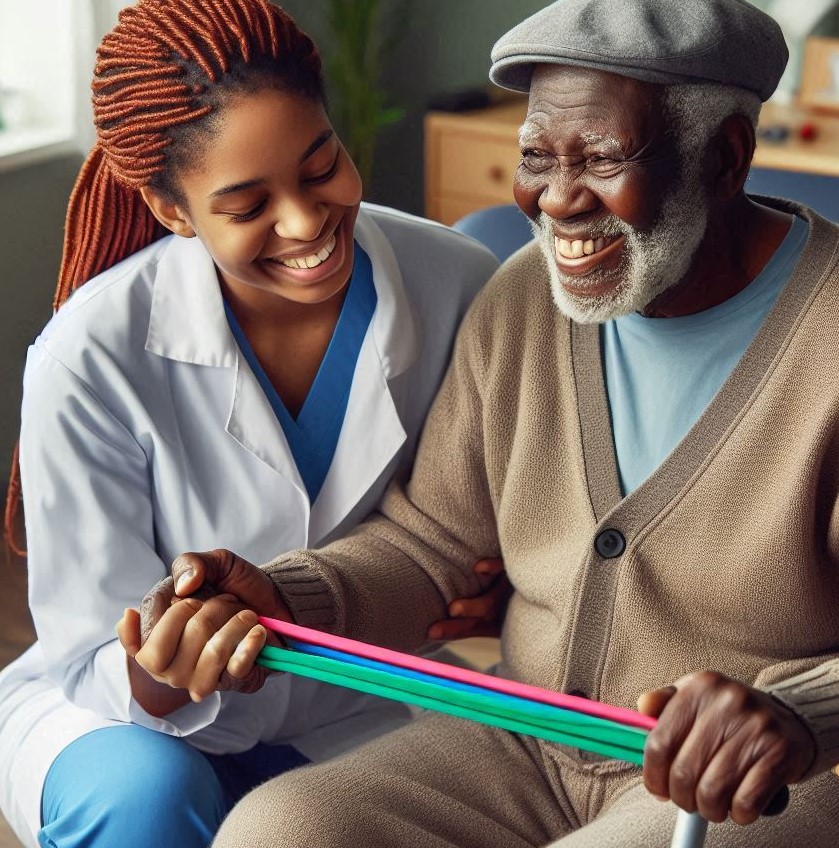
Physiotherapy Clinic in Abuja for the Treatment of Stroke and the Importance of Early Stroke Rehabilitation
Physiotherapy Clinic in Abuja for the Treatment of Stroke and the Importance of Early Stroke Rehabilitation: Why the First Weeks After a Stroke Shape Your Recovery?
A stroke disrupts blood flow to the brain, and within minutes, brain cells in the affected area begin to die. The damage can be devastating, affecting movement, speech, balance, memory, and even personality. Yet, a stroke is not necessarily the end of independence or quality of life.
The human brain possesses an incredible ability called neuroplasticity—the capacity to reorganize itself and create new pathways that can compensate for damaged areas. Rehabilitation takes advantage of this ability, especially during the early weeks after a stroke, when the brain is most responsive to change.
Many people assume recovery should begin only when the patient becomes stronger. In reality, the opposite is true. Waiting weeks or months can mean missing the period when recovery happens most rapidly.
Here is why early stroke rehabilitation matters and how it can significantly influence long-term outcomes.
Understanding Stroke and Its Effects
Stroke occurs when blood supply to a part of the brain is interrupted, either because of a blockage (ischemic stroke) or bleeding (hemorrhagic stroke). Since the brain controls every aspect of the body, damage in one area can lead to various impairments, including:
- Weakness or paralysis on one side of the body.
- Difficulty walking or maintaining balance.
- Problems with speech and communication.
- Swallowing difficulties.
- Memory and cognitive impairments.
- Emotional changes, depression, or anxiety.
- Loss of independence in everyday activities.
The severity and pattern of these problems differ from person to person, making individualized rehabilitation essential.
1. Neuroplasticity Is Highest in the First Three Months
The brain is most adaptable immediately after a stroke. During this period, surviving brain cells actively try to reorganize and establish new connections.
Early physiotherapy, occupational therapy, and speech therapy provide repeated, task-specific practice that helps strengthen these new pathways.
If rehabilitation is delayed, these opportunities become harder to harness because unused pathways weaken over time.
The principle is simple:
“Use it or lose it.”
Movement and practice send a message to the brain that those functions are still important. Repetition reinforces these messages and promotes recovery.
For example, repeatedly practicing standing, reaching, or speaking simple words encourages the brain to reorganize itself around those activities.
2. Prevents Secondary Complications
Remaining in bed for prolonged periods creates complications that can become as disabling as the stroke itself.
Common complications include:
Muscle Weakness and Contractures
Lack of movement causes muscles to shorten and joints to become stiff, making later movement much harder.
Weakness in the arm can allow the shoulder joint to partially separate, leading to pain and reduced function.
Pressure Sores
- Prolonged pressure on certain areas of the body can damage the skin and underlying tissues.
- Pneumonia
- Reduced movement and impaired swallowing increase the risk of lung infections.
- Deep Vein Thrombosis: Poor circulation in immobile patients can lead to blood clots in the legs, which may become life-threatening.
Learned Non-Use
When the affected limb becomes difficult to use, patients often rely exclusively on the unaffected side. Over time, the brain begins to “ignore” the affected limb, making recovery more challenging.
Early rehabilitation helps prevent these complications through positioning, exercises, and regular movement.
3. Improves Functional Independence Faster
Recovery isn’t only about moving muscles—it is about restoring independence.
Patients want to:
– Sit up independently.
– Transfer from bed to chair.
– Walk to the bathroom.
– Feed themselves.
– Dress without assistance.
– Return to work or social activities.
– Communicate effectively.
Research shows that medically stable patients who begin rehabilitation within 24–48 hours often achieve better outcomes in walking ability, balance, and activities of daily living.
Small gains made early accumulate over time.
Someone who learns to sit unsupported during the first week is more likely to stand in the second week and begin walking later.
Progress builds upon progress.
Stroke affects more than the body. It affects emotions, confidence, and identity.
Many survivors experience:
– Anxiety.
– Depression.
– Fear of being dependent.
– Frustration.
– Social withdrawal.
The inability to communicate or perform simple tasks can be emotionally overwhelming.
Early rehabilitation provides structure, encouragement, and hope.
Even small achievements such as:
– Moving a finger.
– Sitting unsupported.
– Standing for ten seconds.
– Saying a single word.
can dramatically improve motivation and confidence.
Emotional recovery and physical recovery often go hand in hand.
5. What Early Rehabilitation Actually Looks Like
Early rehabilitation does not mean aggressive or exhausting exercise. Instead, it means safe, frequent, and appropriate intervention.
Physiotherapy: Physiotherapy focuses on:
– Proper positioning.
– Bed mobility.
– Sitting balance.
– Transfers.
– Standing practice.
– Early walking with support.
– Stretching to prevent stiffness.
– Improving balance and coordination.
The aim is to restore movement patterns while preventing complications.
Occupational Therapy:
Occupational therapists help patients regain independence in everyday tasks such as:
– Eating.
– Bathing.
– Dressing.
– Grooming.
– Hand function.
– Fine motor skills.
They may also recommend home modifications and assistive devices to improve safety.
Speech and Language Therapy:
Stroke frequently affects speech and swallowing. Speech therapy focuses on:
– Communication skills.
– Speech production.
– Language comprehension.
– Swallowing safety.
– Cognitive rehabilitation.
Early intervention helps prevent aspiration and improves communication abilities.
Family Education:
Caregivers play an essential role in recovery.They are taught:
– Safe transfer techniques.
– Proper positioning.
– Home exercise programs.
– Fall prevention.
– Ways to encourage independence without doing everything for the patient.
6. The Importance of Repetition
Recovery depends on repetition. The brain learns through repeated experiences. This means:
– Practicing standing repeatedly.
– Reaching for objects multiple times.
– Repeating speech exercises.
– Performing daily activities independently whenever possible.
Short, frequent sessions are often more effective than long exhausting ones.
Consistency is the key.
7. Recovery Is Different for Everyone
No two stroke survivors are exactly alike. Recovery depends on factors such as:
– Type of stroke.
– Severity of brain injury.
– Age.
– Existing medical conditions.
– Motivation.
– Family support.
– Access to rehabilitation.
Some people recover rapidly, while others require months or years of therapy. Progress should never be compared with someone else’s journey. Every improvement matters.
8. Nutrition and Hydration Matter: Healing requires proper nutrition. Stroke survivors need:
– Adequate protein.
– Fruits and vegetables.
– Healthy fats.
– Sufficient water intake.
Patients with swallowing difficulties should be evaluated by a speech therapist to ensure they can eat safely. Good nutrition supports:
– Muscle recovery.
– Brain function.
– Immune health.
– Energy levels.
9. Preventing Another Stroke
Rehabilitation also focuses on preventing future strokes. Risk factors that need management include:
– High blood pressure.
– Diabetes.
– High cholesterol.
– Smoking.
– Excess alcohol consumption.
– Obesity.
– Physical inactivity.
Lifestyle modifications, exercise, and medication adherence are essential components of long-term recovery.
10. The Role of Family Support
Family support significantly influences outcomes. Encouragement, patience, and involvement help survivors maintain motivation. Families should:
– Celebrate small victories.
– Encourage independence.
– Avoid overprotecting.
– Participate in home exercises.
– Provide emotional support.
Recovery can be frustrating, but persistence and positivity make a tremendous difference. Common Barriers and How to Address Them
“They’re Too Weak”: Even passive movements and proper positioning can begin immediately. Rehabilitation is tailored to the person’s condition.
“We’ll Wait Until They’re Stronger”: Waiting often causes further weakness and loss of mobility. Gentle activity actually promotes strength.
Fear of Falling: Rehabilitation professionals provide safe environments and techniques that reduce risks.
Lack of Access to Rehabilitation: Home programs guided by physiotherapists and caregiver-assisted exercises can still make a substantial difference.
Financial Challenges: Prioritizing essential rehabilitation and maintaining consistency often produces better outcomes than delaying treatment altogether.
Long-Term Recovery Is a Journey: Stroke recovery doesn’t stop after hospital discharge. Many survivors continue improving months and even years later. Continued rehabilitation may involve:
– Strength training.
– Balance exercises.
– Gait retraining.
– Community reintegration.
– Fitness programs.
– Return-to-work rehabilitation.
Patience and consistency remain critical. Recovery is rarely a straight line. There may be setbacks, but progress is still possible.
The Bottom Line: The brain recovers fastest when it is challenged early, safely, and consistently. Delaying rehabilitation does not make recovery easier; it often makes it harder.
Early rehabilitation:
– Promotes neuroplasticity.
– Prevents complications.
– Restores independence.
– Improves mobility.
– Supports emotional well-being.
– Enhances quality of life.
– Reduces long-term disability.
At Effective Physiotherapy & Fitness Clinic, Abuja, we work with stroke survivors and their families from the acute phase through community reintegration. Every rehabilitation plan is individualized according to the type of stroke, the impairments present, and the patient’s personal goals. Recovery is possible, and early action makes all the difference.
If you or someone you know has experienced a stroke in the last few weeks, what is the biggest challenge right now, mobility, speech, balance, or daily activities? Reach out to us today, and our team will explain what early rehabilitation should target first.
Call and Contact Us Now:
Address: Number 2, D Close, Ajumgobia Street, Behind Upland Mall, Kado Estate,
Abuja 900108, Federal Capital Territory.
📞 Phone: +2348034365055, +2348118856060
💬WhatsApp: +2348034365055,🌐 Connect With Us Online:
YouTube🔔: https://www.youtube.com/@effectivephysiotherapyfitness
Facebook👍🏻: https://www.facebook.com/effectivephysiotherapyclinic
TikTok❤️: https://www.tiktok.com/@effectivephysio1?lang=en
Instagram❤️: https://www.instagram.com/effectivephysio
Twitter/X: https://x.com/effectivephysio