Treatment Of Rotator Cuff Injury
Treatment Of Rotator Cuff Injury: The Rotator Cuff is a group of muscles and tendons surrounding your shoulder joints. They help you lift and move your arms away from your body. The Rotator Cuff…
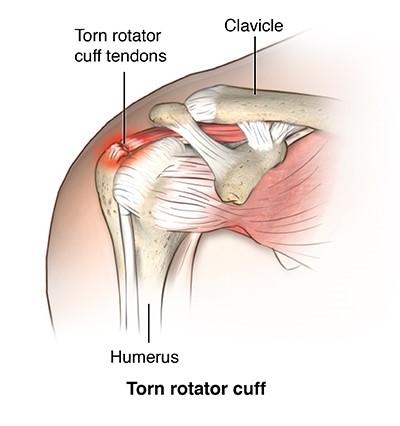
Treatment Of Rotator Cuff Injury: The Rotator Cuff is a group of muscles and tendons surrounding your shoulder joints. They help you lift and move your arms away from your body. The Rotator Cuff keeps the ball of the upper arm bone (humerus) firmly in the shoulder blade socket.
A rotator cuff injury cause a dull ache in the shoulder, which often worsens with use of the arm away from the body. A partial or complete tear in the rotator cuff makes it difficult to raise and move your arm. You may sustain shoulder pain and arm weakness. This type of injuries are common, especially as you get older. In some cases, surgery may be required to re-attach a torn rotator cuff. Basically, rest, medications and physical therapy can bring lasting relief
Types of Torn Rotator Cuffs
Rotator Cuff tears could be partial or complete?
- Firstly, Partial Tear: With an incomplete or partial tear, the tendon still somewhat attaches to the arm bone.
- Secondly. Complete Tear: With a full-thickness or complete tear, the tendon separates completely from the bone. In this case, there’s a hole or a split in the tendon.
Symptoms
Signs of a rotator cuff tear include:
- Difficulty and pain while raising your arm.
- Popping or grinding sounds or sensations when moving your arm.
- Shoulder pain that gets worse at night or when you rest your arm.
- Shoulder weakness and difficulty in lifting items
- A dull ache deep within the shoulder
- Sleep disturbance
- Difficulty in combing your hair or reaching behind your back
- Arm weakness
Many people with rotator cuff disease can manage their symptoms and return to activities with physical therapy exercises that improve flexibility and strength of the muscles around the shoulder joint.
Causes
There are 2 main causes of rotator cuff tears: Wound and Degeneration.
An injury to the rotator cuff, such as a tear, may happen suddenly when falling on an outstretched hand. It may also develop over time due to repetitive activities.
Rotator cuff tears may also happen due to aging, with degeneration of the tissues.
Diagnosing Rotator Cuff Tears
The condition may be diagnosed through obtaining medical history and physical exam, diagnostic procedures including the following:
- X-ray. It uses invisible electromagnetic energy beams to produce images of internal tissues, bones, and organs onto film.
- Magnetic Resonance Imaging (MRI). A diagnostic procedure that uses a combination of large magnets, radiofrequencies, and a computer to produce detailed images of organs and structures within the body.
Risk factors
The following factors may increase your risk of having a rotator cuff injury:
- Age. As you get older, your risk of a rotator cuff injury increases. Rotator cuff tears are most common in people older than 60.
- Construction jobs. Occupations such as carpentry or house painting require repetitive arm motions, often overhead, that can damage the rotator cuff over time.
- Family history. There may be a genetic component involved with rotator cuff injuries as they appear to occur more commonly in certain families.
Prevention
If you are at risk of rotator cuff injuries or if you’ve had a rotator cuff injury in the past, daily shoulder strengthening exercises can help prevent future injury.
Most people exercise the front muscles of the chest, shoulder and upper arm, but it is equally important to strengthen the muscles in the back of the shoulder and around the shoulder blade to optimize shoulder muscle balance. Your doctor or a physical therapist can help you plan an exercise routine.
Treatment for Rotator Cuff Injury
Some of the symptoms could be effectively managed by some people with rotator cuff disease and return to activities with physical therapy exercises that improve flexibility and strength of the muscles around the shoulder joint.
Three majour treatment options for a rotator cuff injury include 1). Medications; 2). Surgery and 3) Physiotherapy.
- Medications: Pain relief drugs such asNonsteroidal anti-inflammatory drugs (NSAIDs) or Steroid injections could be used to minimize pain and swelling in muscles around this area.
- Surgery: Some rotator cuff tears do not heal without surgery. Surgery may be required if you have a complete tear or nonsurgical treatments don’t help a partial tear. You may also have surgery if your job or athletic interests affect the shoulder.
For a partial tear, your healthcare provider may only need to trim fraying pieces of a partially torn tendon. This debridement procedure keeps the shoulder ball and socket from catching on the tendon and tearing it more.
After surgery, you need to wear a sling to restrain your arm for four to six weeks. You can then start physical therapy. Most people regain shoulder function and strength within four to six months after surgery, but full recovery may take from 12 to 18 months.
- Physiotherapy Treatment for Rotator Cuff Injury
Having this type of injury does not necessarily result in a surgery as most patients with partial tears get better with nonsurgical treatments.
Physiotherapy treatment programme, is one of the most effective non-surgical treatments for this condition. Reducing pain and muscle tension in the scapular and neck area in order to promote the motility of the scapula is one of the goals here. Your Physiotherapist can achieve this through the application of cold or heat and massage; a series strengthening, range of motion and stretching exercises; the use of an arm sling to give your shoulder time to heal.
Visit Effective Physiotherapy & Fitness Clinic for the Treatment Of Rotator Cuff Injury Now !!
Contact us on:
Address: No. 2 Ajumgobia Close, Kado Estate, Abuja
Call: +234811 885 6060 | +234 909 860 4470
YouTube: https://www.youtube.com/@effectivephysiotherapyfitness
Need help with this problem?
This article is general information, not a diagnosis. If these symptoms sound like yours, book an assessment at our clinic in Kado Estate, Abuja.
Medical disclaimer: Content on this website is for general education and does not replace an in-person assessment. If you have severe pain, sudden weakness, chest pain, difficulty breathing, or symptoms after a serious injury, seek urgent medical care.