
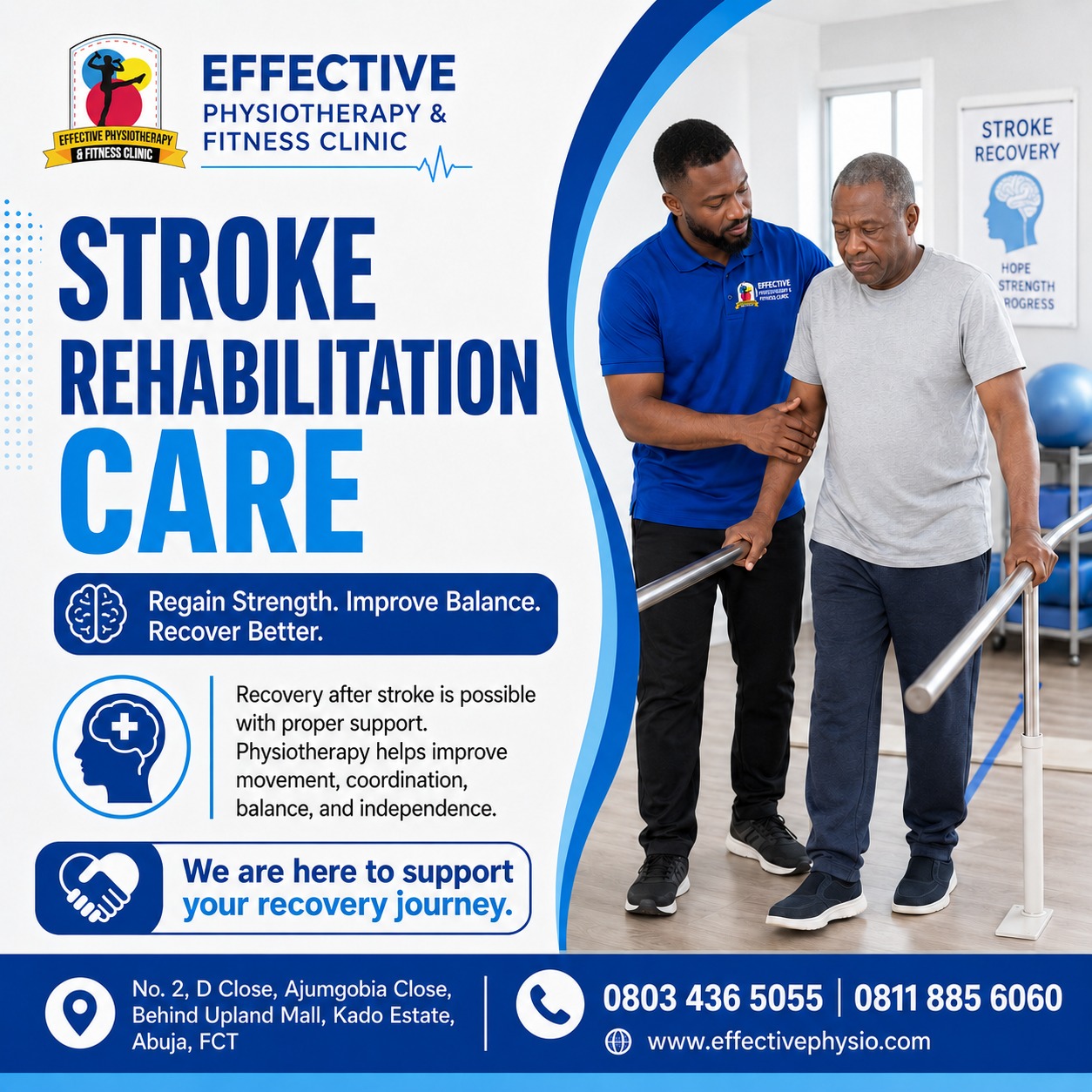
A Physiotherapy Clinic in Abuja Known for Stroke Rehabilitation, Recovery, and Long-Term Care
Expert Stroke Physiotherapy Services at Effective Physiotherapy and Fitness Clinic Abuja
A stroke can change a person’s life in an instant. Simple activities such as walking, speaking, eating, dressing, or even moving an arm may become difficult after a stroke. However, with early intervention, proper medical care, and professional physiotherapy rehabilitation, many stroke survivors can regain independence and significantly improve their quality of life.
If you are searching for a Physiotherapy Clinic in Abuja for Stroke Rehabilitation, Effective Physiotherapy and Fitness Clinic provides comprehensive, evidence-based stroke rehabilitation programs designed to help individuals recover physical function, improve mobility, regain confidence, and return to daily activities.
Our team understands the physical, emotional, psychological, and social challenges that stroke survivors and their families face. Through personalized rehabilitation plans, advanced therapeutic techniques, and continuous support, we help patients achieve the best possible recovery outcomes.
What Is a Stroke?
A stroke is a serious medical emergency that occurs when blood flow to part of the brain is interrupted or reduced. The brain depends on a continuous supply of oxygen-rich blood to function properly. When blood flow stops, brain cells begin to die within minutes.
Because different brain regions control different bodily functions, the effects of a stroke vary depending on which region is affected and how much damage occurs.
A stroke can affect:
- Movement and mobility
- Balance and coordination
- Speech and language
- Memory and thinking
- Vision
- Sensation
- Emotional regulation
- Daily functional activities
Without prompt treatment, stroke can lead to permanent disability, severe complications, or death.
Understanding How a Stroke Affects the Brain
The brain acts as the body’s control centre. Specific areas within the brain control every movement, thought, memory, and sensation.
When a stroke occurs, the affected area of the brain can no longer perform its normal functions effectively.
For example:
- Damage to the left side of the brain may affect speech and language.
- Damage to the right side of the brain may affect balance, coordination, and awareness.
- Damage to motor control areas may lead to weakness or paralysis.
- Damage to visual pathways may cause vision problems.
This is why stroke symptoms differ from one person to another.
Types of Strokes
Understanding the different types of strokes is important because treatment and recovery approaches may vary.
- Ischemic Stroke
An ischemic stroke occurs when a blood vessel supplying blood to the brain becomes blocked.
This blockage prevents oxygen and nutrients from reaching brain tissue.
Approximately 80–85% of strokes are ischemic strokes.
Causes of Ischemic Stroke
Common causes include:
Atherosclerosis
Atherosclerosis refers to the hardening and narrowing of arteries due to fatty deposits known as plaques.
As these plaques grow, they can reduce blood flow or trigger clot formation.
Blood Clotting Disorders
Certain medical conditions increase the tendency of blood to clot, raising the risk of stroke.
Heart Disease
Heart rhythm disorders such as atrial fibrillation can cause blood clots to form and travel to the brain.
High Cholesterol
Elevated cholesterol levels contribute to plaque formation and artery blockage.
- Hemorrhagic Stroke
A hemorrhagic stroke occurs when a blood vessel in the brain ruptures and bleeds into surrounding brain tissue.
The bleeding increases pressure inside the skull and damages brain cells.
Causes of Hemorrhagic Stroke
Common causes include:
High Blood Pressure
Long-term uncontrolled hypertension weakens blood vessel walls.
Brain Aneurysms
An aneurysm is a weakened area in a blood vessel wall that can rupture unexpectedly.
Brain Tumors
Certain tumors can increase the risk of bleeding.
Traumatic Head Injury
Severe head trauma can damage blood vessels within the brain.
Blood Vessel Malformations
Abnormal blood vessel structures may rupture and cause bleeding.
Warning Signs and Symptoms of Stroke
Recognizing stroke symptoms quickly can save lives.
Medical treatment should be sought immediately whenever stroke symptoms appear.
Common symptoms include:
Weakness or Paralysis
Sudden weakness or inability to move:
- One arm
- One leg
- One side of the body
- Facial muscles
Many stroke survivors experience difficulty lifting an arm or standing without assistance.
Facial Drooping
One side of the face may droop or appear uneven.
The person may be unable to smile normally.
Speech Difficulties
Stroke can affect communication in several ways:
Difficulty speaking clearly
Slurred speech
Loss of speech
Difficulty understanding language
Trouble finding the right words
This condition is often referred to as aphasia.
Vision Problems
Stroke may cause:
Blurred vision
Double vision
Partial vision loss
Complete loss of vision in one eye
Balance and Coordination Problems
Many stroke survivors experience:
- Dizziness
- Vertigo
- Unsteady walking
- Frequent falls
- Difficulty standing
Cognitive Changes
Stroke can affect thinking abilities, leading to:
- Confusion
- Poor concentration
- Memory problems
- Reduced awareness
Severe Symptoms
In severe cases, stroke may result in:
- Loss of consciousness
- Coma
- Significant neurological impairment
How Long Does a Stroke Last?
The effects of a stroke continue as long as blood flow to the affected part of the brain remains disrupted.
Brain cells begin to die within minutes when deprived of oxygen.
While the stroke event itself may occur over a relatively short period, its consequences can last:
- Days
- Weeks
- Months
- Years
- A lifetime in severe cases
Recovery depends on:
- Stroke severity
- Area of the brain affected
- Patient age
- General health condition
- Access to rehabilitation
- Consistency of therapy
The earlier rehabilitation begins, the greater the potential for recovery.
Common Complications After Stroke
Many individuals experience ongoing challenges after a stroke.
These may include:
Muscle Weakness
Weakness often affects one side of the body.
Paralysis
Some patients may lose movement in certain muscles or limbs.
Spasticity
Muscles may become stiff, tight, or difficult to control.
Joint Contractures
Limited movement over time can cause joints to become permanently stiff.
Balance Problems
Poor balance increases the risk of falls and injury.
Difficulty Walking
Many survivors require retraining to regain safe walking ability.
Shoulder Pain
Post-stroke shoulder pain is common and can interfere with recovery.
Fatigue
Stroke survivors often experience significant physical and mental fatigue.
Emotional Changes
Many individuals experience:
Anxiety
Depression
Frustration
Reduced confidence
The Importance of Early Stroke Rehabilitation
Research consistently shows that early rehabilitation improves recovery outcomes.
Physiotherapy helps the brain take the advantage of a process known as neuroplasticity.
Neuroplasticity refers to the brain’s ability to reorganize itself and form new neural connections.
Through repeated movement practice and therapeutic exercises, healthy parts of the brain can learn to take over some functions that were lost after stroke.
This process can help patients regain:
Mobility
Strength
Balance
Coordination
Independence
How Physiotherapy Helps Stroke Recovery
Physiotherapy is one of the most important treatments after a stroke.
At Effective Physiotherapy and Fitness Clinic, our rehabilitation programs are designed to address the specific needs of each patient.
Mobility Rehabilitation
Stroke frequently affects movement.
Our physiotherapists help patients improve:
- Walking
- Standing
- Transfers
- Functional mobility
Mobility training allows patients to safely move around at home and in the community.
Muscle Strengthening
Weak muscles can limit independence.
Our strengthening programs focus on:
- Upper limbs
- Lower limbs
- Core muscles
- Postural muscles
- Improved strength enhances overall function and endurance.
- Balance Training
Balance deficits are a major cause of falls after stroke.
We provide targeted balance exercises to improve:
- Stability
- Coordination
- Confidence
- Walking safety
- Gait Training
- Walking may become difficult after a stroke.
Our gait rehabilitation program focuses on:
- Walking pattern correction
- Weight shifting
- Step control
- Walking endurance
- Safe use of assistive devices
Coordination Exercises
Stroke often affects the ability to perform smooth and controlled movements.
Coordination training helps patients regain precise movement control.
Flexibility and Range of Motion Exercises
Regular stretching helps:
- Prevent stiffness
- Reduce pain
- Improve mobility
- Maintain joint health
Functional Training
Functional rehabilitation focuses on real-life activities.
Patients practice tasks such as:
- Sitting
- Standing
- Reaching
- Climbing stairs
- Getting in and out of bed
Fall Prevention Programs
Preventing falls is a critical aspect of stroke rehabilitation.
Our therapists educate patients on:
- Safe movement techniques
- Home safety modifications
- Balance improvement strategies
Pain Management
Physiotherapy can help reduce:
- Shoulder pain
- Joint discomfort
- Muscle tightness
- Postural strain
Stroke Prevention Strategies
Although not every stroke can be prevented, healthy lifestyle choices can significantly reduce risk.
Eat a Healthy Diet
Focus on:
- Fruits
- Vegetables
- Whole grains
- Lean protein
- Healthy fats
Reduce:
- Salt
- Processed foods
- Sugary drinks
- Saturated fats
Stay Physically Active
Regular exercise helps:
- Improve circulation
- Lower blood pressure
- Maintain healthy weight
- Improve cardiovascular health
Control Blood Pressure
High blood pressure remains one of the leading causes of stroke.
Routine monitoring and treatment are essential.
Manage Diabetes
Proper blood sugar control reduces damage to blood vessels.
Maintain Healthy Cholesterol Levels
Healthy cholesterol levels reduce plaque formation and arterial blockage.
Avoid Smoking
Smoking damages blood vessels and significantly increases stroke risk.
Limit Alcohol Consumption
Excessive alcohol intake increases the likelihood of hypertension and stroke.
Attend Regular Medical Check-ups
Routine health screenings can identify risk factors before complications occur.
Why Choose Effective Physiotherapy and Fitness Clinic in Abuja?
When it comes to stroke rehabilitation, selecting the right physiotherapy clinic can make a significant difference in recovery outcomes.
At Effective Physiotherapy and Fitness Clinic, we provide patient-centered care focused on restoring function and improving quality of life.
Comprehensive Assessment
Every rehabilitation journey begins with a detailed evaluation.
We assess:
- Strength
- Balance
- Mobility
- Functional limitations
- Recovery goals
Personalized Treatment Plans
No two stroke survivors are the same.
Each patient receives a customized rehabilitation program based on individual needs.
Experienced Physiotherapists
Our team has extensive experience in neurological rehabilitation and stroke recovery.
Evidence-Based Care
We use proven rehabilitation techniques supported by current physiotherapy practice and research.
Family and Caregiver Education
Recovery is often most successful when family members are involved.
We provide guidance to help caregivers support rehabilitation efforts safely and effectively.
Holistic Recovery Approach
We understand that stroke affects more than just physical movement.
Our approach addresses:
- Physical health
- Emotional well-being
- Mental resilience
- Functional independence
Begin Your Stroke Recovery Journey Today
A stroke can be life-changing, but recovery is possible with the right support and rehabilitation.
At Effective Physiotherapy and Fitness Clinic Abuja, we are committed to helping stroke survivors regain independence, improve mobility, restore confidence, and achieve the highest possible quality of life.
Whether you are recovering from a recent stroke or managing long-term stroke-related challenges, our dedicated physiotherapy team is ready to support your journey every step of the way.
Contact Effective Physiotherapy and Fitness Clinic today to schedule a professional stroke rehabilitation assessment and begin your path toward recovery.
Contact Us
Address: No 2, D Close, Ajumgobia Street, Behind Upland Mall, Opp Con Oil Filling Station, Kado Estate, FCT Abuja.
📞Phone:+2348034365055,+2348118856060
💬 WhatsApp: +2349098604470
🌐SociaMedia:
YouTube:https://www.youtube.com/@effectivephysiotherapyfitness
Facebook:https://www.facebook.com/effectivephysiotherapyclinic
TikTok:https://www.tiktok.com/@effectivephysio1?lang=en
Instagram:https://www.instagram.com/effectivephysio