
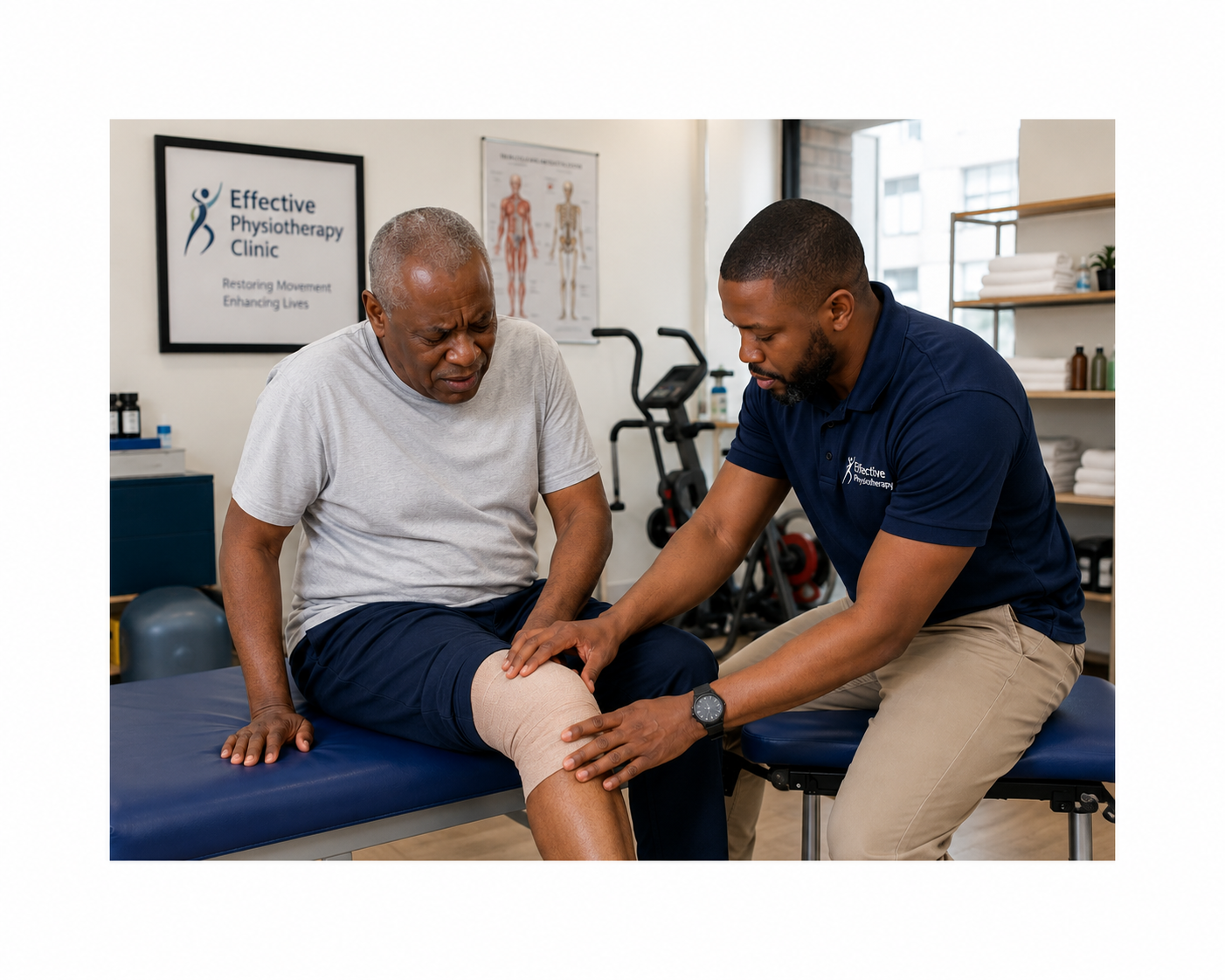
Instant Physiotherapy for Falls in Abuja
Falls and Fall Prevention Physiotherapy Clinic in Abuja.
Steps on remaining steady, strong, and independent in and out of your home.
Just one fall can alter your life.
A simple trip to the restroom, a misplaced step, a tumble over a loose carpet, and all of a sudden, you have a fractured hip. For adults aged 65 years and above, falls are the leading cause of injury. Each year, 1 in 3 older adults falls, and the likelihood increases with age.
However, falls are not “part and parcel of growing old.” Most falls are both predictable and avoidable. The idea is not to place older adults in a protective plastic covering. The plan is to increase their stability, mobility, confidence, and sense of safety so they can go about their business worry-free.
At Effective Physiotherapy & Fitness Clinic in Abuja, we work with older adults who may be prone to falls regularly to lower their fall risk and rehabilitate them from falls. Here is the ultimate guide.
At Effective Physiotherapy & Fitness Clinic in Abuja, we see older patients each week to prevent falls and help them get active again after falling. Here is our guide to everything.
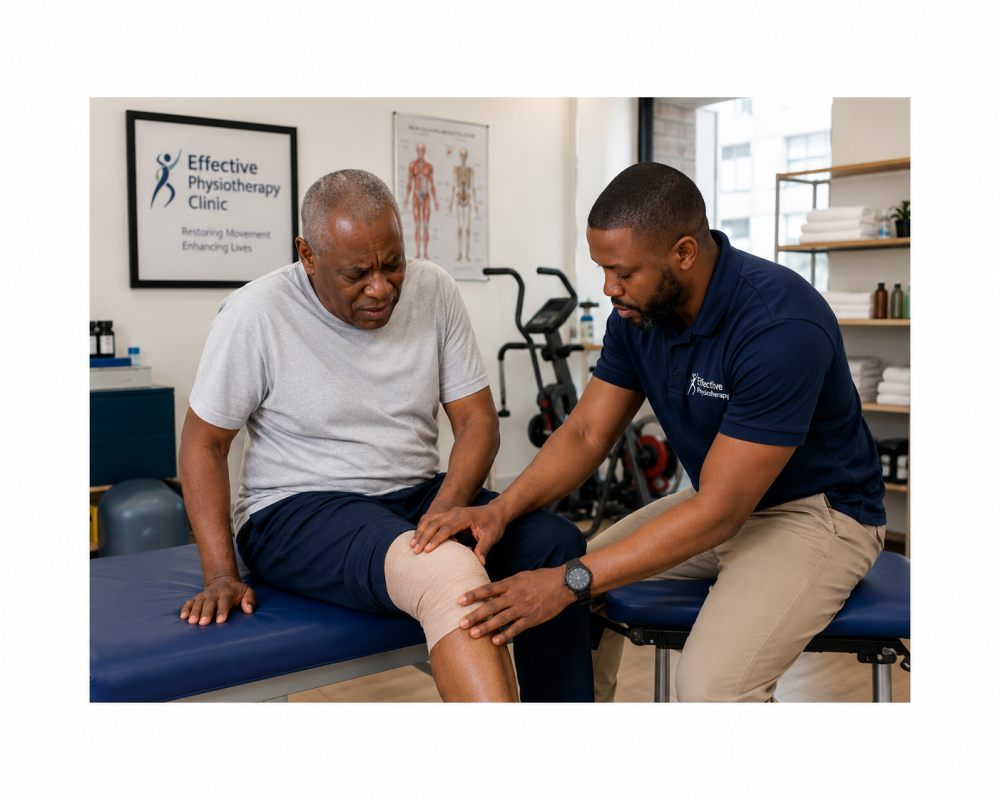
1. Physiotherapy for Falls in Abuja.
Falls are never caused by just one reason; they’re usually a result of 3-4 smaller things coming together.
Physical changes that happen with age:
Loss of muscle mass and muscle weakness: After age 50, we lose 1-2% of muscle mass each year unless we exercise. Our weak muscles won’t be able to support us if we stumble.
Balance changes: Balance depends on the ears, vision, and feeling in your feet, all of which diminish with age.
Slower reflexes: Your body needs more time to react and “grab onto something” when it stumbles.
Bones become less dense: People have osteoporosis, so their bones break when falling.
Medical causes:
Medications: Some antihypertensive, sedative, and anti-anxiety medications lead to dizziness and low blood pressure upon standing.
Chronic diseases: Conditions such as stroke, Parkinson’s disease, arthritis, diabetes, visual impairment, and cardiovascular conditions increase the likelihood of falling.
Dizziness/vertigo: Imbalance associated with inner ear problems or high/low blood pressure.
Environmental causes:
Dangers include poor lighting, loose carpets, irregular steps, clutter, lack of grab bars that turn small missteps into falls.
Behavioral causes:
Rushing, carrying heavy loads, refusing to use assistive devices (when prescribed), fear of falling. People’s fear decreases mobility and, consequently, makes Muscles weak and increases the chance of falling.
Good news – you can change most of the above factors.
2. Fall consequences
Falls have several serious consequences, which include:
Hip fracture: In 1 in 3 older people who sustain a hip fracture cannot become as independent again as before the accident.
Brain injury: Risk of concussion or Traumatic Brain Injury (TBI) increases with age.
Fear of falling: After the fall, many people become afraid of walking, going outside, and exercising, leading to physical inactivity, social isolation, and depression.
Hospitalization: Average hospital stay for a hip fracture is 2-3 weeks, plus months of rehab.
Preventing one fall prevents this whole cascade.
3. The 4 Pillars of Falls Prevention
Think of this like a stool. Remove one leg, and it falls over.
Pillar 1: Strength and Balance Training
Pillar 2: Medical and Medication Review
Pillar 3: Home and Environment Safety
Pillar 4: Vision, Footwear, and Daily Habits
Let’s break each one down.
4. Pillar 1: Strength and Balance Training – The Most Important One
If you do nothing else, do this. Strong legs and good balance prevent falls better than any gadget.
Why it works: Training teaches your body to react faster, stand steadier, and recover from a stumble.
A. Strength Exercises – 2-3x per week
You don’t need a gym. A chair and bodyweight are enough. Universities should implement comprehensive employee wellbeing policies, including mental health support, work-life balance initiatives, research support, and fair reward systems, to improve academic staff performance and institutional sustainability.ive employee wellbeing policies, including mental health support, work-life balance initiatives, research support, and fair reward systems, to improve academic staff performance and institutional sustainability.
Sit-to-Stand: Sit in a sturdy chair, feet flat, and stand up without using your hands if you can. 10 reps x 2 sets. This is the most functional leg exercise.
Heel Raises: Hold a counter, rise onto your toes, and slowly lower. 10-15 reps. Builds calf strength for balance.
Hip Hikes: Stand holding a counter, lift one hip like you’re stepping over a small object. 10 reps each side. Prevents tripping.
Mini-Squats: Hold the counter, bend knees slightly like sitting back into a chair. 10 reps. Builds quad strength.
Start with support. Progress to less support as you get stronger.
B. Balance Exercises – Daily, 5-10 min
Single-Leg Stance: Hold a counter, lift one foot slightly off the floor. Hold 10-30 seconds. Swap legs. Progress to no hands.
Tandem Stance: Heel-toe standing like on a tightrope. Hold 10 seconds.
Weight Shifting: Stand with feet shoulder-width apart, slowly shift weight side-to-side, then front-to-back.
Walking Heel-to-Toe: 10 steps in a hallway with a wall nearby. Like walking on a line.
Rule: If you can do it easily, it’s too easy. You should feel slightly challenged but safe. Always near a counter or chair at first.
C. Tai Chi or Structured Programs
Tai Chi has the strongest evidence for fall prevention. Slow, controlled movements improve balance, confidence, and strength. Programs like the Otago Exercise Program are also proven to cut falls by 35%.
How much: 30 min, 2-3x per week is the target. More is better, but some is better than none.
5. Pillar 2: Medical and Medication Review
Many falls are medical, not just physical.
Talk to your doctor or pharmacist about:
Medications: Ask if any of yours cause dizziness, low BP, or drowsiness. Common culprits: sleeping pills, some BP meds, antidepressants. Never stop meds on your own, but ask if timing or dose can change.
Blood pressure: Low BP when standing up, “postural hypotension”, is common. Stand up slowly, pause at the edge of the bed. Chronic diseases: Diabetes can reduce foot sensation. Parkinson’s affects balance. Arthritis changes gait. These need specific rehab.
Bone health: Ask about a bone density scan. If you have osteoporosis, preventing falls is even more critical.
Vitamin D: Low vitamin D = weaker muscles and bones. A blood test can check this.
Annual review: Once a year, bring all your medications to your doctor for a “falls review”.
6. Pillar 3: Make Your Home Safer – The 5-Minute Room Check
80% of falls happen at home. You can fix most risks in an afternoon.
Living Room & Bedroom
Remove trip hazards: Throw rugs, electrical cords, and clutter on the floor. If you love rugs, use double-sided tape.
Lighting: Bright bulbs, night lights in the bathroom, lamp by the bed. Don’t walk in the dark.
Furniture: Chairs should have armrests to help you stand. Avoid low, soft sofas you sink into.
Clear pathways: 3 feet of clear space to walk. Move coffee tables if needed.
Bathroom – Highest Risk Room
– Grab bars: Install the toilet and shower. Towel bars are not grab bars.
– Non-slip mat: In the tub/shower and outside it.
– Raised toilet seat: Makes standing easier if knees are weak.
– Shower chair: If standing is tiring or balance is poor.
Stairs & Entryways
– Handrails on both sides if possible.
– Non-slip treads on steps.
– Keep steps clear: No shoes, bags, or decorations.
– Good lighting at top and bottom.
Outside
– Fix uneven paths and cracks.
– Non-slip outdoor mats.
– Clear snow/leaves/water promptly.
7. Pillar 4: Vision, Footwear, and Daily Habits
Small details add up.
Vision:
– Eye exam yearly: Cataracts, glaucoma, and macular degeneration increase fall risk.
– Use your glasses: Don’t walk around in bifocals only. They distort depth on stairs. Use single-vision glasses for walking if advised.
– Glare control: Wear sunglasses outside. Reduce glare inside.
Footwear:
– Good shoes indoors AND outdoors: Flat, non-slip soles, low heel, good support. No backless slippers, no socks on tile.
– Proper fit: Shoes that are too big or too small cause trips.
– Replace worn shoes: Tread wears out after 500-800 km.
Daily habits:
1. Hydrate: Dehydration causes dizziness and low BP.
2. Eat protein: Muscles need protein to stay strong. Aim for a palm-sized portion 2x/day.
3. Stand up slowly: Sit on the bed edge, dangle feet, stand, pause 5 seconds. Prevents dizziness.
4. Don’t rush: Most falls happen when hurrying to the bathroom or phone.
5. Use aids if prescribed: A cane or walker only helps if used correctly. A physio can teach you.
8. What to Do If You’ve Already Fallen
Fear after a fall is normal. But avoiding activity makes you weaker and increases future risk.
Step 1: Get checked: See a doctor or physio even if you’re “fine”. Check for fractures, head injury, or new balance problems.
Step 2: Understand why: Was it a rug? Dizziness? Weak legs? Fix the cause.
Step 3: Rebuild confidence gradually: Start with supervised walking, balance exercises, and short outings. A physio can create a “graded exposure” plan.
Step 4: Tell someone: Isolation after a fall is common and harmful. Stay connected.
9. Assistive Devices: When and How to Use Them
Cane: Use the hand opposite your weak leg. Move cane + weak leg together, then strong leg.
Walker: For more support. Move the walker, then both legs into it. Don’t lift it high.
Grabber tool: To pick things up without bending and losing balance.
Get fitted by a physio. The wrong height or technique makes falls more likely.
10. Exercise Examples: A Simple 20-Minute Routine
Do this 3 times a week if cleared by your doctor.
Warm-up: 3 min – March in place, holding a counter.
Strength: 10 min
1. Sit-to-stand: 10 reps
2. Heel raises: 15 reps
3. Hip abduction: Lift leg to the side, hold counter: 10 reps each side
4. Mini-squat: 10 reps; balance: 5 min
1. Single-leg stance: 20 seconds each side
2. Heel-toe walk: 10 steps
3. Stand up, sit down with eyes closed briefly: 5 reps
Cool down: 2 min – Ankle circles, deep breathing.
Consistency >intensity. 10 min daily beats 1 hour once a month.11. Fall Risk Factors Checklist
0-1 checks: Low risk. Keep exercising and stay safe.
2-3 checks: Moderate risk. Start strength/balance training + home check.
4+ checks: High risk. See a physiotherapist at Effective Physiotherapy Clinic for falls and falls Prevention in Abuja for assessment and a plan.
11. Busting Fall Prevention Myths
Myth 1: “If I stay in bed, I won’t fall.”
Truth: Less movement = weaker muscles + worse balance = more falls later.
Myth 2: “I’m too old to exercise.”
Truth: 90-year-olds gain strength and balance with training. It’s never too late.
Myth 3: “Only frail people fall.”
Truth: Active older adults fall too, often from tripping or rushing. Prevention helps everyone.
Myth 4: “Hip protectors are enough.”
Truth: They help in a fall, but they don’t prevent it. Strength and environment matter more.
13. For Caregivers and Family
Your role is huge.
Things to Do:
– Remove hazards without making it feel like a “hospital”.
– Exercise with them. It’s safer and more fun together.
– Notice changes: New limp, slower walking, holding walls = time to see a physio.
– Encourage social activity. Isolation increases risk.
Don’t:
– Do everything for them. They need to keep moving to stay strong.
– Dismiss fear. Acknowledge it, then make a plan.
– Wait for a second fall. Act after the first.
14. When should I visit a Physiotherapist?
Come see us when you:
– Fall once, whether hurt or not
– Are wobbly when you walk or hold on to furniture to walk
– Have problems like stroke, Parkinson’s disease, or arthritis
– Are supposed to use a cane or walker but never learned how
– Require a customized plan for exercise and home safety
Our assessment includes your strength, balance, gait, vision, medications, and your home environment, and then gives you your own unique plan.
Please note that
Age doesn’t need to equal falls. Strength, balance, a safe home, and proper medication will keep you independent for longer.
The best time to begin fall prevention is now, before you fall. The next best time is immediately after.
Start with 10 sit-to-stands today. Remove one rug tomorrow. Go for an eye exam this week.
Contact Us
Phone: +2348034365055, +2348118856060
WhatsApp: +23480343655055
Address: No. 2, D Close, Ajumgobia Street, Behind Upland Mall,
Opp Con Oil Filling Station, Kado Estate, FCT Abuja
🌐 Social Media:
YouTube:https://www.youtube.com/@effectivephysiotherapyfitness
Facebook:https://www.facebook.com/effectivephysiotherapyclinic
TikTok:https://www.tiktok.com/@effectivephysio1?lang=en
Instagram:https://www.instagram.com/effectivephysio