
TREATMENT OF SPONDYLOLISTHESIS
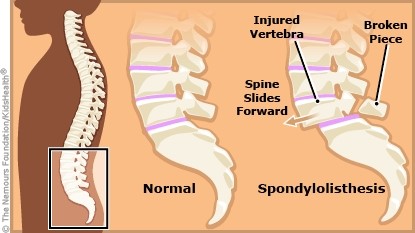
Treatment of Spondylolisthesis: Spondylolisthesis is a spinal disorder in which a vertebra slips forward onto the bone below it, causing mechanical or radicular symptoms or pain. It can arise from congenital, acquired, or idiopathic causes. Understanding the complexity of this condition is crucial for effective management. Treatment strategies may include a combination of physiotherapy, exercise, and in some cases, surgical intervention. Tailoring these approaches to the individual’s specific needs is vital for recovery.
RISK FACTORS
- Sports that put stress on the bones in the lower back, such as gymnastics and football.
- Genetics may also put some people at an increased risk.
- Advanced age.
- Short height.
- Higher BMI.
CAUSES SPONDYLOLISTHESIS
- Repetitive stress to the spinal bones.
- Decreased strength of the neural arch at a young age predisposes children and adolescents to a higher risk of fracture.
- Traumatic accidental injuries.
- Microtrauma in sports.
- Pathological causes – Neoplasm, connective tissue disease, etc.
Iatrogenic – After laminectomy
- Adolescents and children also have more elastic intervertebral disks which cause increased stress to be placed on the pars inter articularis.
Understanding Spondylolisthesis and Its Impact
SYMPTOMS OF SPONDYLOLISTHESIS
- Patients typically have low back pain.
- Pain in the legs, thighs and buttocks that worsens with standing or lowering the back.
- Pain may be exacerbated by direct palpation of the affected segment.
- Atrophy of the muscles, muscle weakness.
- Tense hamstrings, hamstrings spasms.
- Disturbances in coordination and balance, difficulty walking.
- Rarely loss of bowel or bladder control.
TREATMENT OF SPONDYLOLISTHESIS
- Core stability exercises, useful in reducing pain and disability in chronic low back pain in patient with spondylolisthesis.
- Stretching and strengthening exercises.
- Gait training.
- Balance training.
- Endurance training of muscles, effective for chronic low back pain.
- Isometric and isotonic exercises beneficial for strengthening of the main muscles of the trunk, which stabilize the spine.
- Cardiovascular exercise.
Try a session with our seasoned Physiotherapists today at Effective Physiotherapy & Fitness Clinic
YouTube: https://www.youtube.com/@effectivephysiotherapyfitness